
Where Do Goji Berries Come From? History and Origins
Updated: May 2026
Goji berries arrived in the Western health food market in the mid-2000s with the energy of a new discovery. Celebrity endorsements, dramatic nutritional claims and breathless magazine features made them seem like something that had just been found. In fact, they had been eaten across China, Tibet and Central Asia for well over a thousand years — not as a supplement or a trend, but as an ordinary part of everyday cooking and eating.
This post covers where goji berries actually come from, how they have been used historically, and how that history explains why they remain worth eating today.
Where do goji berries come from?
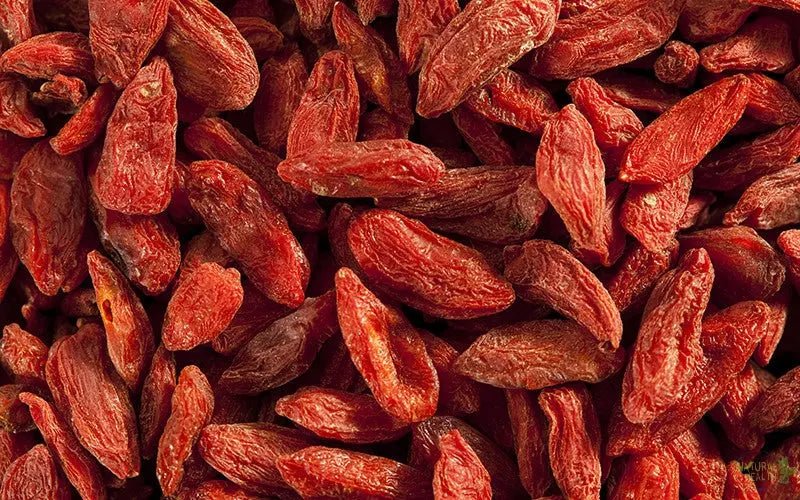
Goji berries are the dried fruit of Lycium barbarum, a shrub that grows naturally across a broad range of environments in China, Mongolia and parts of Central Asia. The plant is hardy and adaptable — it tolerates poor soil, drought and cold temperatures, which contributed to its widespread use across different regions with very different climates.
The two main cultivated varieties are Lycium barbarum, grown primarily in the Ningxia region of north-central China and in Tibet, and Lycium chinense, more common in southern China. Ningxia and Tibetan goji berries are generally considered higher quality — grown at altitude in conditions that suit the plant naturally, and with a longer cultivated history behind them. Our organic goji berries are sourced from Tibet.
A long history of everyday use
Goji berries appear in Chinese herbal texts going back at least to the Tang Dynasty (618–907 AD), and their cultivation in the Ningxia region is documented from the Ming Dynasty (1368–1644). They were eaten as a food — added to soups and stews, brewed as a simple tea, or eaten dried as a portable, long-lasting snack. In Tibetan and Chinese culture they are an ordinary cupboard ingredient rather than an exotic or ceremonial one.
The Western narrative around goji berries as a modern superfood discovery overlooks this entirely. The berries did not need to be discovered — they simply arrived in new markets with new packaging and a new set of claims attached.
The goji berry trend in the West
The berry began appearing in UK health food shops around 2003 to 2005, initially as a dried fruit and later in juices, powders and supplements. By 2006 the BBC was running features on them; by 2007 they were on supermarket shelves. The trend was real, but the claims that accompanied it — many of them dramatic and unsubstantiated — were not.
What the trend did do was introduce a genuinely useful ingredient to a much wider audience. Stripped of the hype, goji berries have stayed on shelves because people like eating them, not because they have been convinced of anything extraordinary.
How goji berries are grown and dried
The berries are harvested in late summer and early autumn, typically by hand or by shaking the branches over collection sheets — the fruit is too delicate for mechanical harvesting. After picking, they are dried in the sun or in drying facilities to reduce moisture and extend shelf life. The drying process concentrates the flavour and makes the berries suitable for long storage and export.
Organically grown goji berries avoid pesticide use during cultivation. Our Tibetan organic goji berries are Soil Association certified organic, which provides independent verification of growing standards through the whole supply chain.
From Tibet to your cupboard
The distance from the Tibetan plateau to a UK kitchen is considerable, which makes sourcing and certification all the more important. We work directly with growers in Tibet, which means we can trace the berry’s journey and have confidence in both the growing conditions and the drying process.
For more on what goji berries contain and how they compare to the superfood claims made about them, our post on whether goji berries are really a superfood takes a grounded look at the evidence. And for practical ideas on how to use them at home, our post on what to do with dried goji berries covers everything from snacking to baking to tea.
