
Organic Coconut Sugar: What It Is, Where It Comes From and How to Use It
Updated:
Coconut sugar has been used as a sweetener in Southeast Asia for generations — long before it appeared on Western health food shelves. This post covers where it comes from, how it is made, what it tastes like, and how to use it practically.
Where coconut sugar comes from
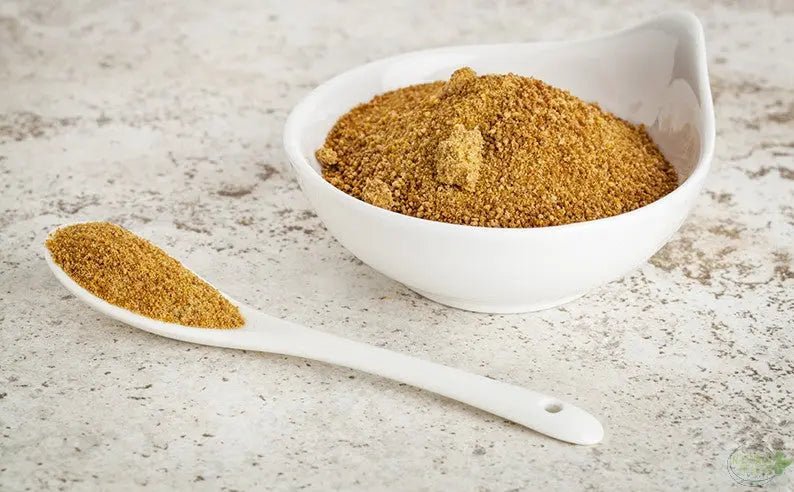
Coconut sugar is produced from the sap of the coconut palm flower bud, not from the coconut fruit itself. The palm flower stalks are tapped and the sap that flows out is collected. It is then gently heated to evaporate the water content, leaving behind a caramel-coloured sugar that sets and is then granulated or broken into blocks.
This process has been used across parts of Indonesia, the Philippines, Thailand and Sri Lanka for centuries. The Food and Agriculture Organization of the United Nations documents coconut palm sugar as a significant traditional product in these regions, noting both its cultural history and its relatively simple production method compared to refined cane sugar.
What coconut sugar tastes like
The flavour is one of the most distinctive things about it. Coconut sugar has a warm, caramel character — less sweet than white sugar, with mild toffee and brown sugar notes. It does not taste of coconut. That earthier, more complex flavour works well in baking, in granola and flapjacks, and in hot drinks where you want a less sharp sweetness than white sugar provides.
How to use it
Coconut sugar can be substituted for white or brown sugar at a one-to-one ratio in most everyday recipes. Its golden-brown colour will come through in lighter bakes — worth being aware of if you are making a pale sponge. For porridge, yoghurt, smoothies, granola bars and coffee it works directly without any adjustment.
It dissolves well in hot liquids and holds up to baking temperatures without significant change in character. The texture is slightly coarser than refined white sugar, which can be pleasant in crumbles, flapjacks and other textured bakes.
What coconut sugar is — and is not
Coconut sugar is less processed than refined white sugar and retains more of the naturally occurring compounds present in the sap. It is still a sugar — primarily sucrose — and should be used with the same everyday mindfulness as any other sweetener. It is not a health food, but it is a traditionally produced, minimally refined ingredient with a genuinely useful flavour profile.
Our organic coconut sugar is Soil Association certified organic, sourced from Southeast Asia and packaged plastic-free. For a direct comparison of coconut sugar and white sugar, our post on coconut sugar vs white sugar covers the differences in detail.
