
Organic Safflower Tea: The Plant, Its History and How to Brew It
Updated:
Safflower is one of the oldest cultivated plants in the world, yet its tea remains one of the lesser-known herbal infusions in the UK. Understanding where it comes from, what gives it its distinctive character, and how it has been used across different cultures is a good starting point for anyone curious about this unusual herbal drink.
What Is Safflower?
Safflower (Carthamus tinctorius) is a thistle-like flowering plant that has been cultivated by humans for at least 4,000 years. Archaeological evidence places its use in ancient Egypt, where its petals were found in garlands buried in tombs dating back to around 3,500 BC. Its name in Portuguese — açafrão — reflects its historical role as a cheaper substitute for saffron; the plant was used as a yellow-red dye for food and fabric long before it became a source of oil or tea.
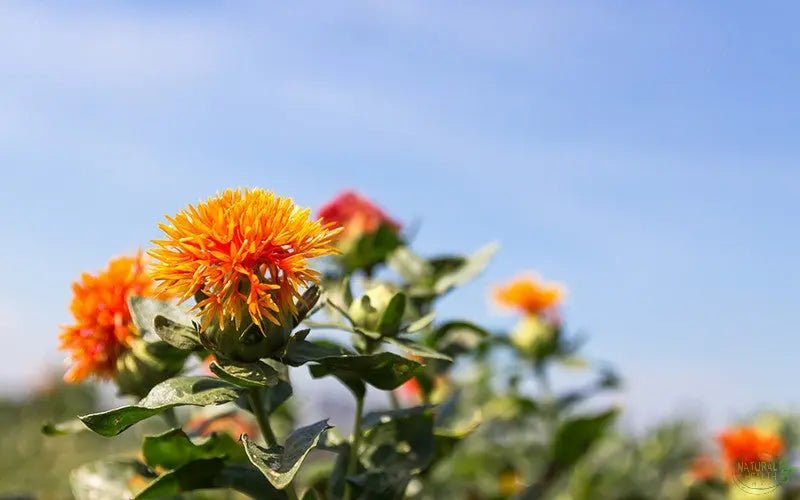
The plant grows across warm, dry climates and is now cultivated widely in India, Mexico, the United States, and across Central Asia. It produces vivid orange-red flowers at the end of spiny, branching stems that can reach a metre in height — the flowering heads are the part harvested for tea.
Safflower Tea: What It Is and How It Is Made
Safflower tea is an infusion made from the dried petals (and sometimes the florets) of the safflower plant. The dried petals have a warm amber-to-gold colour and produce a tea that is mild, slightly floral, and subtly sweet — considerably gentler than many other herbal infusions and easy to drink without sweetening.
The flavour is delicate rather than bold. It lacks the tartness of hibiscus, the intensity of ginger, or the strong aromatic character of chamomile. What it offers instead is a clean, lightly warm cup with an unusual faint sweetness that comes from the petals themselves.
Traditional Use
Safflower has a long history in both Traditional Chinese Medicine (TCM) and Ayurvedic practice, where it has been documented for several centuries. In TCM it is associated with the concept of moving stagnant Qi and blood — it has traditionally been used as a circulatory herb in this context. In Ayurveda it has been used as an expectorant and warming herb.
Across parts of Asia, safflower tea is consumed as an everyday drink rather than an occasional herbal remedy. It is more familiar as a household staple in East and South Asian contexts than it is in Europe, where it remains relatively niche outside specialist health food shops.
The seeds of the safflower plant are pressed to produce safflower oil, which has its own culinary and cosmetic uses. The oil is high in linoleic acid — an omega-6 fatty acid — and is used widely in cooking and food manufacturing.
How to Brew Safflower Tea
- Use approximately 1 teaspoon of dried safflower petals per cup
- Pour freshly boiled water and steep for 5–7 minutes
- Strain and serve — it can be drunk plain, with a slice of lemon, or with a small amount of honey
The colour of the brew ranges from a pale golden-yellow to a deeper amber depending on how long it is steeped and the concentration of petals used. Longer steeping intensifies both the colour and the flavour.
Who Should Avoid Safflower Tea?
- Pregnant women should not drink safflower tea — it has a documented traditional use as an emmenagogue (a substance that stimulates or increases menstrual flow) and may pose risks during pregnancy
- Those with bleeding disorders or taking anticoagulant medication should consult their GP before using safflower products
- Anyone planning surgery should avoid safflower products in the weeks prior
Safflower in the Context of Herbal Teas
For more background on the plant and its traditional uses across Ayurvedic and Chinese medicine contexts, our companion post Getting to Know Organic Safflower Tea covers the detail. For a broader look at antioxidant-rich plant foods, our guide to antioxidant foods and ORAC values is worth reading alongside this one.
Browse our full range of organic herbal teas — all Soil Association certified organic and packaged plastic-free.

1 comment
IM ON A BLOOD THINNER WARFERIN 1 MCG IS IT OK TO DRINK SAFFLOWER TEA
AS I ALSO DONT HAVE GREAT CIRCULATION PARTICUARLY IN THE FEET AND HAVE GOUT EVERY NOW AND THEN